Rymni: How a Clear Vision and AI Turned an Idea Into a Real Product
Some projects start with a market gap. Some start with a spreadsheet. And some start with a feeling. Rymni feels like that third kind.
What makes this project interesting is not just that it works, but that it shows how quickly a real, thoughtful product can come to life when you have a strong idea and use AI well. Not as a magic trick. Not as a replacement for taste or direction. But as a force multiplier.
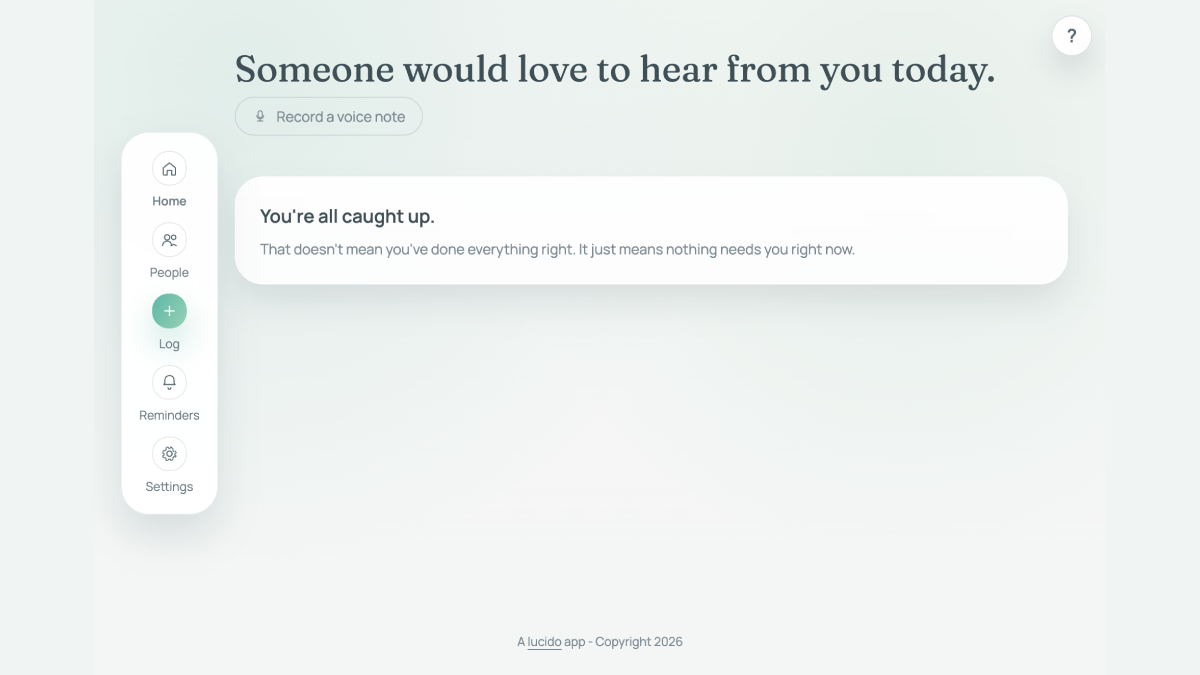
Rymni is a relationship app built around a very human problem: staying meaningfully connected to people you care about. It helps you remember important details, log interactions, keep track of follow-ups, and get gentle nudges about who might appreciate a message, a check-in, or a small act of kindness. That alone already makes it useful. But the way it has been put together is what makes it such a good example of modern product building.
A Real Product, Not A Thin Demo
This is not a flimsy demo pretending to be a startup. It is a proper full-stack application. Under the hood, it uses Next.js, React, TypeScript, tRPC, Prisma, and PostgreSQL. That means real authentication, typed APIs, database-backed user data, structured reminder logic, imports, exports, offline support, and notifications. In other words: it is not just an idea with a nice homepage. It is alive.
What is especially fun about a project like this is how clearly it proves the current moment in software. If you have a vague idea, AI can help you make vague things faster. But if you have a sharp vision, AI can help you build something surprisingly complete, surprisingly quickly. Rymni shows that beautifully. It includes reminders, people profiles, fact tracking, conversation history, voice workflows, AI summaries, push notifications, offline drafts, and import/export tooling. That is a lot of real product surface area from one coherent vision.
Using AI In The Right Places
And then AI enters the picture in exactly the right way.
Instead of trying to have AI build everything, Rymni gives it practical jobs. Voice notes can be recorded and transcribed. Summaries can be generated from conversations. Facts can be extracted from interactions. Message drafts can be suggested. Even small kindness tips can appear when you need a nudge. That is a smart pattern. The app is not surrendering control to AI. It is using AI to reduce friction around memory, follow-through, and communication.
That is what makes this project feel modern in a good way. The builder still has the vision. The builder still decides what matters. AI simply helps close the gap between concept and execution much faster than before.
The Name Carries The Idea
And the concept itself has a lot of heart behind it.
The name Rymni was not pulled from a random brand generator. It came from a deeper idea: creating space. That was the core concept from the beginning, especially after a trip to Iceland, where that feeling of openness, calm, and emotional room really stuck. At the same time, the focus was shifting toward building and maintaining relationships, which often comes down to having the right kind of space and the right kind of reminder.
- rými in Icelandic: means space, room, capacity.
- Then came the meerkat angle: with greni, meaning burrow, shelter.
- The goal: a single, brandable word, not a phrase.
- The result: the two ideas were blended into Rymni.
The result is elegant: Rymni means space plus shelter, a place that creates room for people, thoughts, and relationships, safely and intentionally.
That is a strong name because it does more than sound good. It reflects the product. Rymni is not trying to guilt people into becoming productivity robots for friendship. It is trying to create a calm, structured space where relationships are easier to care for. That is a much better ambition.
What Rymni Proves
The lesson is simple: when you know what you want to build, and why, AI can help you get to a working live project with remarkable speed. Rymni is a perfect example of that. It started with a feeling, became a concept, turned into a name, and then into software people can actually use.
That is not hype. That is the new creative workflow, working exactly as it should.